We are a resilient people, and we have accepted a lot over the years.
We have made peace with the traffic that turns a twenty-minute drive into an hour and a half. We have adjusted to the power cuts that show up unannounced and stay longer than any welcome guest.
We have watched the price of everything climb steadily while salaries struggle to keep up, and somehow we have kept going.
But there are some things, specific things, that Ghanaians collectively and quietly wish did not cost money. This is not a petition or a protest.
It is simply a list of five things that, in a kinder and more logical world, would just be free. You already know what they are.
Here are five of them.
1. Healthcare
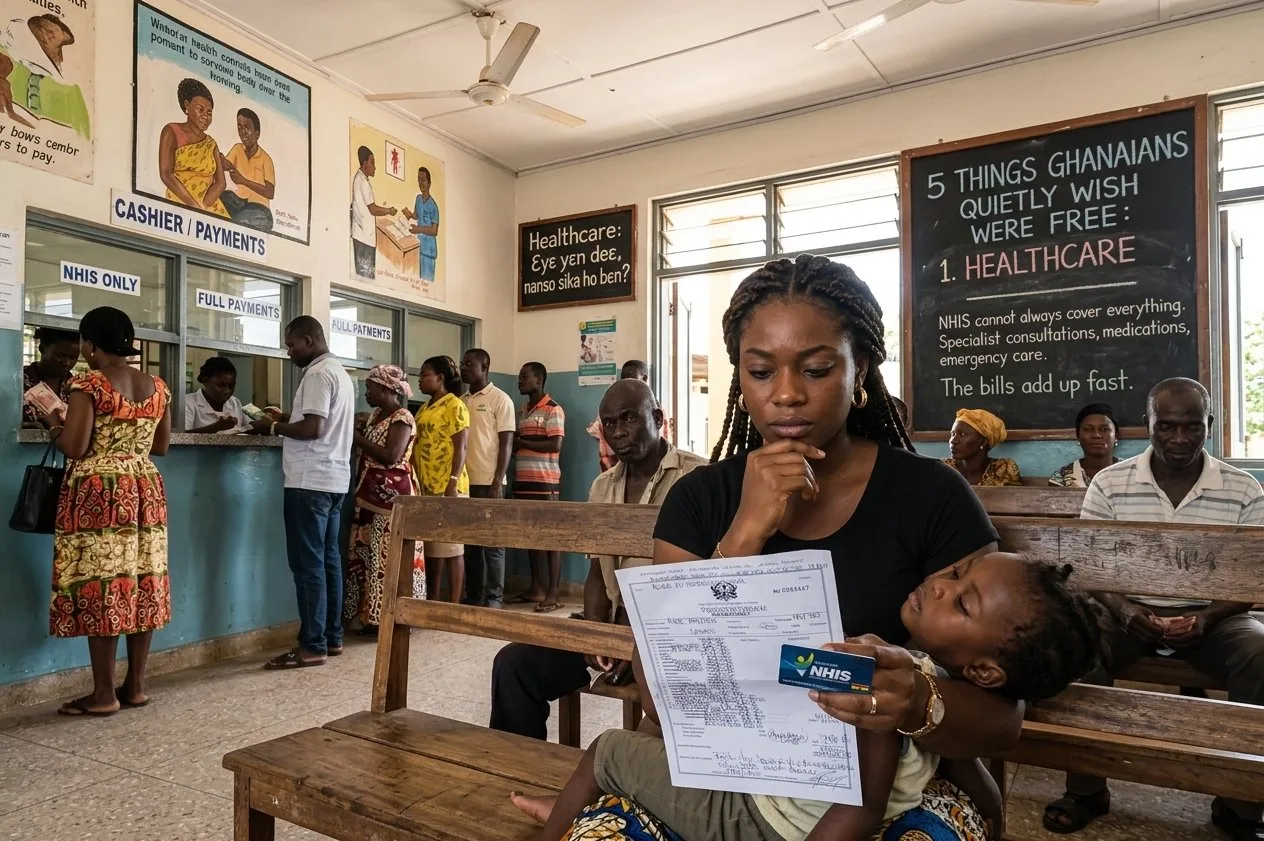
You can be sick and broke at the same time in Ghana, and the NHIS will not always save you. Specialist consultations, certain medications, emergency care- the bills add up fast and not everyone can absorb them. Free, comprehensive healthcare remains one of the most requested things Ghanaians wish the state would just sort out.
2. University Education

For years, university in Ghana has been a financial calculation that too many families cannot win. Tuition fees climbed steadily, the student loan scheme existed mostly on paper for anyone who tried to actually use it, and the question of which child gets to go was often answered by which child the family could afford to send. That is starting to change.
The government’s No Fees Stress policy, implemented in 2025, covers academic fees for first-year students at public universities, and around 15,000 students have already benefited. It is a real step forward. But the first year is just the beginning, and the fees come back in year two.
Until the policy covers all four years and not just the first, the dream of truly free university education in Ghana remains a dream worth chasing.
3. Data

Ghana has some of the most expensive mobile data on the continent relative to average income. Ghanaians spend a significant portion of their earnings just to stay online, and in a world where almost everything, jobs, banking, government services, happens on the internet, expensive data is not just inconvenient. It is a barrier.
4. Sanitary Products

Period poverty is real in Ghana and not enough people talk about it. Girls miss school because they cannot afford sanitary pads, and women manage entire months around a cost that is entirely biological and entirely unavoidable.
The good news is that Ghana has started moving on this. In April 2025, President Mahama launched a Free Sanitary Pad Distribution Programme covering girls from Primary 5 through senior high school, across all 261 districts in all 16 regions.
Over 12.2 million pads have already been distributed, reaching approximately 2.5 million schoolgirls. It is a meaningful and long overdue step. But until every woman and girl, in school or not, can access sanitary products without reaching into her pocket, it stays on this list.
5. Public Toilets
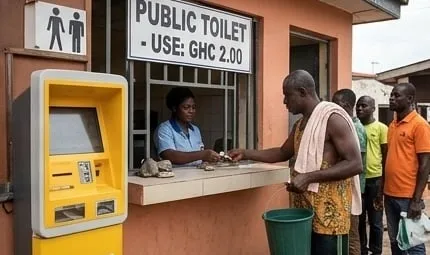
You should not have to pay to use a toilet. And yet, in many parts of Accra and across the country, public toilet facilities charge per use, which means the people who need them most, those without home facilities, are also the ones paying most frequently. It is one of those quiet inequities that rarely makes headlines but affects millions of people daily.