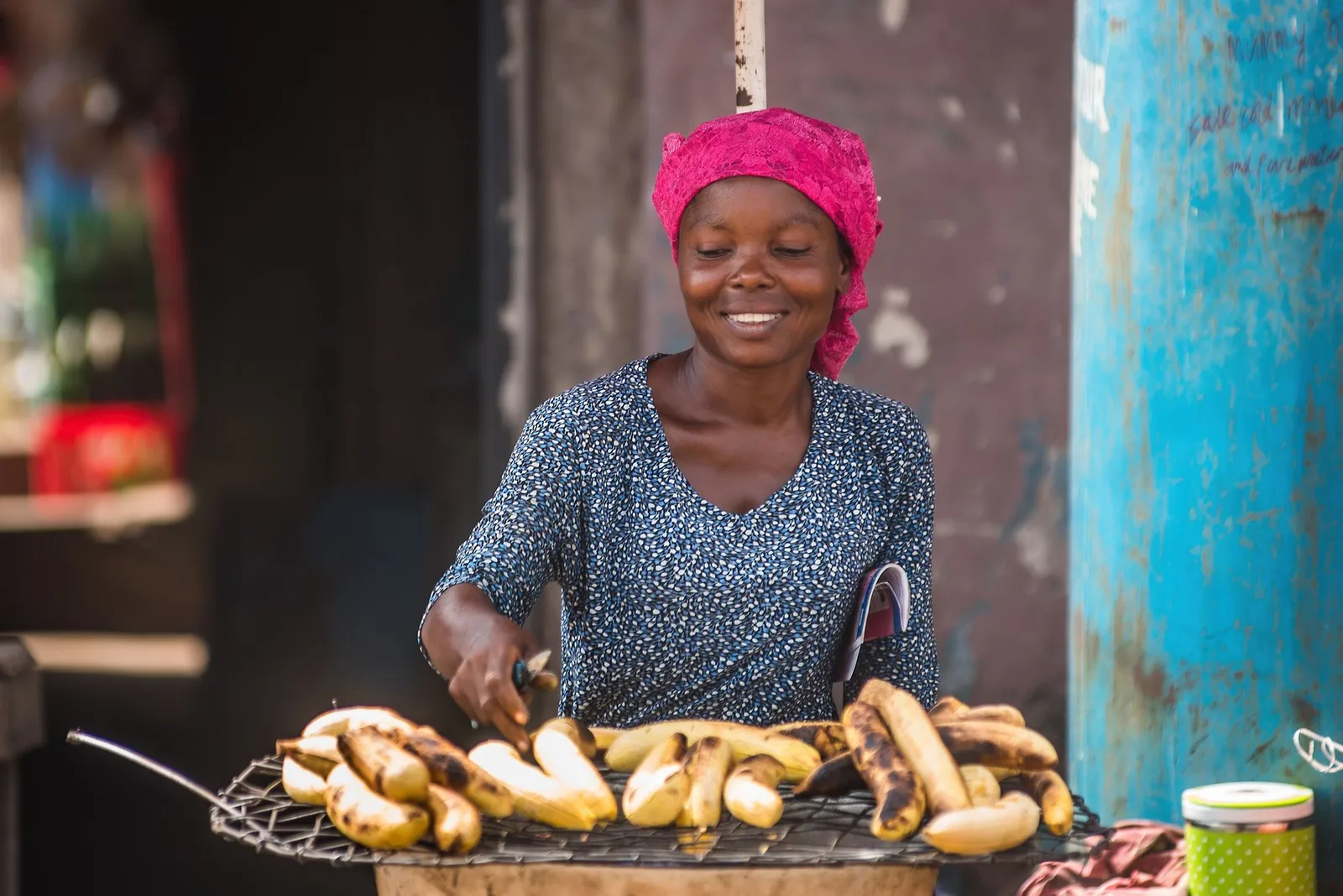
Ghanaian street food has a way of finding you.
It is there at the lorry station when your trotro is still waiting for two more passengers, at the school gate when the closing bell rings, outside the church after a long service and at the roadside on your way home when you are too tired to cook.
Most of it costs less than a bottle of water in a supermarket, and yet it has fed generations of students, workers and hungry people in traffic.

For many of us, these foods are tied to memories. There is the kelewele your mother bought on Friday evenings as a treat, the bofrot you shared with friends during break time at school, and the roasted plantain that kept you going at the end of the month when your pocket money ran out. You might not remember the name of the woman who sold it to you, but you remember exactly where she sat and how she wrapped it.
We have put together six street foods that almost every Ghanaian has eaten at least once, and if you grew up here, you have probably eaten all of them.
1. Kofi Brokeman (roasted plantain and groundnuts)

Nobody knows who Kofi was, but we all know why he was broke. Roasted plantain with a handful of groundnuts has rescued many Ghanaians at the end of the month, because it is cheap, it fills you up, and the woman roasting it by the roadside will usually throw in an extra piece if she likes your face. The plantain should be ripe enough to be sweet but still firm, and anyone who eats it without groundnuts is simply wasting the experience.
2. Chichinga

If you have ever followed the smell of smoke and spices at night, it probably led you to a chichinga stand. These skewers of beef, chicken or gizzard are coated in yaji, a spicy groundnut mix, and grilled over charcoal until they are smoky and slightly charred. They taste best eaten on the spot, usually with sliced onions and a bit of pepper on the side.
3. Kelewele

Kelewele is what happens when ripe plantain meets ginger, pepper and hot oil. The plantain is cut into small cubes, seasoned with spices that usually include ginger and pepper and sometimes cloves or onion, then fried until the edges are dark and caramelised. It comes out mostly in the evening, when roadside sellers light their fires, and it is even better with a handful of groundnuts on the side.
4. Bofrot (buff loaf)
Round, golden and dangerously easy to eat five at a time, bofrot is fried dough that is crispy on the outside and soft on the inside. Some people call it buff loaf, others call it puff-puff, but whatever name you use, it pairs perfectly with a cold drink, a cup of tea or, if you are in a hurry, nothing at all.
5. Boiled corn and coconut
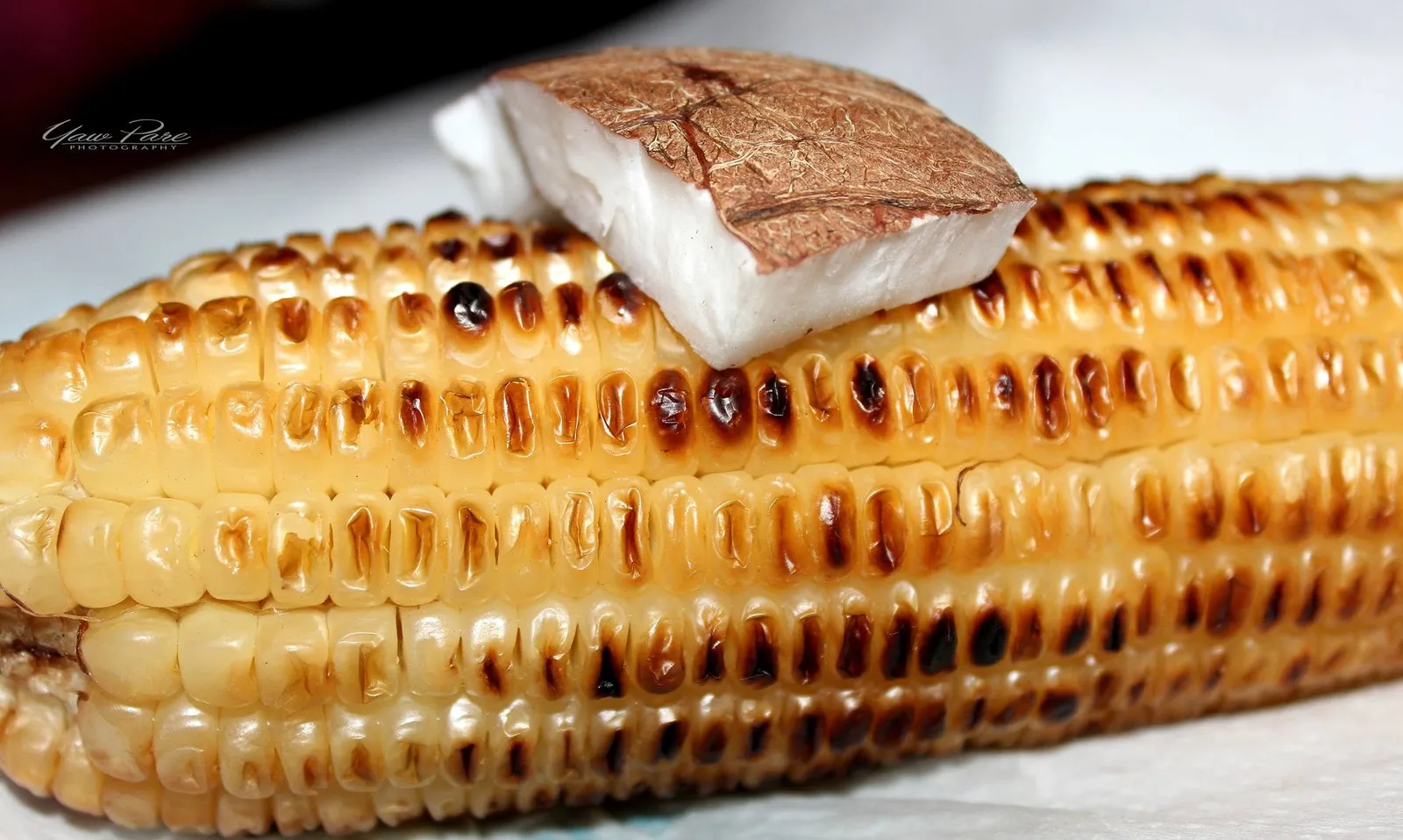
When fresh corn comes into season, the roadside fills up with sellers offering boiled or roasted cobs, and the right way to eat one is with a few slices of fresh coconut. The sweetness of the coconut balances the corn so well that it feels like a full meal, and a cob in one hand and a piece of coconut in the other is one of the most Ghanaian sights there is.
6. Kosua ne meko
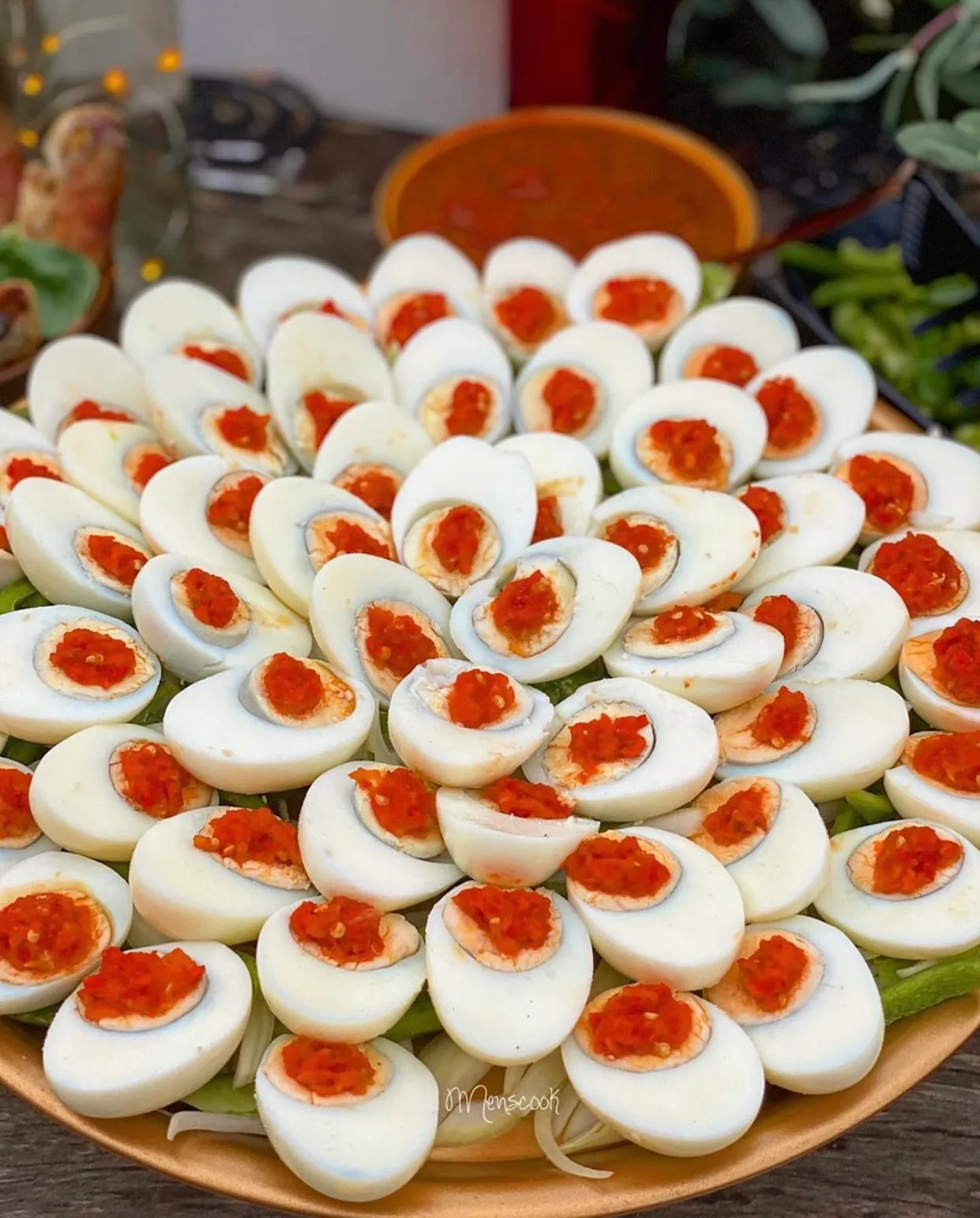
Kosua ne meko, a boiled egg with ground pepper, is the snack that follows you everywhere in Ghana, from lorry stations to school gates to traffic. The seller peels the egg, cuts it open and fills it with a spoonful of fresh pepper mixed with onion and sometimes tomato, and you eat it standing up before your trotro moves. It costs little and keeps you going for hours.